


Introduction
Honey has been used for centuries as a natural sweetener and healing food. However, not all honey is the same. Today, most consumers face confusion between raw honey and processed honey. Understanding the difference is essential to make healthier choices for your body and lifestyle.
What Is Raw Honey?
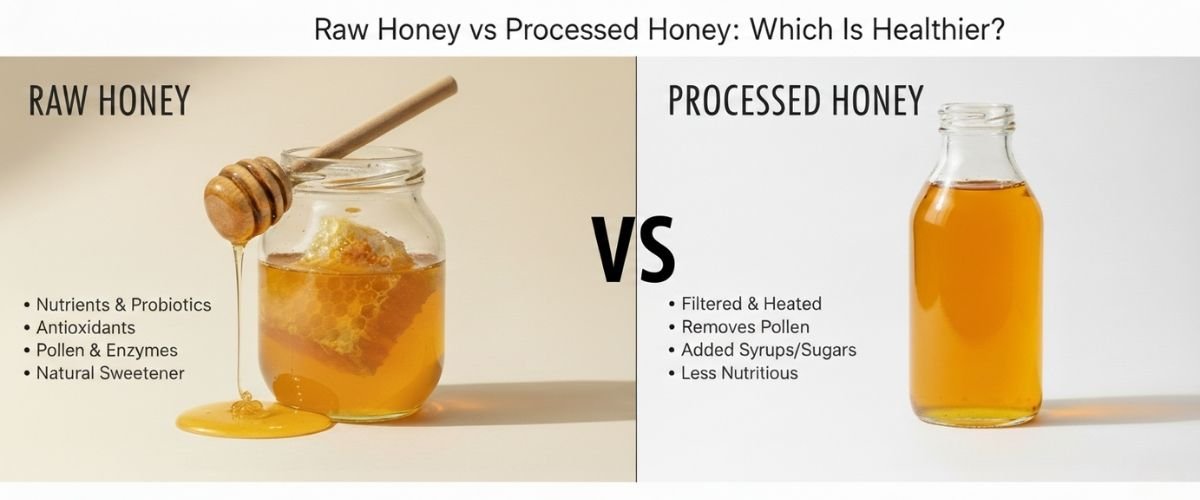
Raw honey is honey in its purest form, extracted directly from honeycombs, lightly strained, and never heated excessively. It retains:
- Natural enzymes
- Antioxidants
- Pollen and propolis
- Vitamins and minerals
Raw honey may crystallize over time — a sign of purity, not spoilage.
What Is Processed Honey?
Processed honey is heated and filtered to improve shelf life and appearance. During this process:
- Enzymes are destroyed
- Nutritional value is reduced
- Pollen is removed
- Sometimes sugar syrups are added
It looks smooth and clear but offers fewer health benefits.
Nutritional Differences
| Aspect | Raw Honey | Processed Honey |
|---|---|---|
| Enzymes | High | Very Low |
| Antioxidants | Rich | Minimal |
| Pollen | Present | Removed |
| Health Value | High | Low |
Health Benefits Comparison
Raw honey supports:
- Immunity
- Digestion
- Wound healing
- Skin health
Processed honey mainly acts as a sweetener with limited health impact.
Which Honey Should You Choose?
If health is your priority, raw honey is the clear winner. Choose trusted, organic sources to ensure purity and quality.
Conclusion
Raw honey is not just a sweetener — it’s a natural superfood. Processed honey may look attractive, but raw honey delivers real nutritional value.